
About CJ Healy, Ph.D.
Senior Fellow
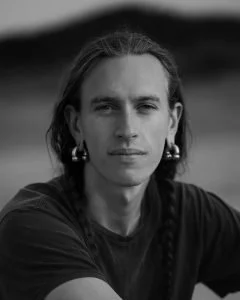
“Nature loves courage.” – Terence McKenna
I practice individual psychoanalytic psychotherapy with adults and adolescents, couples therapy, and ketamine-assisted psychotherapy (KAP).
In all these modalities, I'm interested in helping you get into closer touch with underlying thoughts and feelings that, as long as they remain unrecognized, profoundly impact your behaviors, self-perceptions, and relationships. The goal is to help you better understand yourself and your own mind and, through that, find new ways forward.
Many patients come to therapy feeling there's something about themselves they don't fully understand: why they struggle in relationships with friends, family, or romantic partners; why they have problems at work, at school, or in their sex lives; why their emotions feel confusing, unmanageable, or out of control; or why they feel different from other people or as though something is wrong with them.
Psychoanalytic psychotherapy, couples therapy, and ketamine-assisted psychotherapy (KAP) are all powerful ways to get in deeper touch with yourself and transform your experience of yourself, your emotions, your relationships, and the world.
Patients describe me as calm, welcoming, and thoughtful, and say that I have a patient and reassuring presence. I will listen to you carefully and help you see where there may be more to what you say, and to what you see, than you realize.
Availability: I provide in-person therapy in New York City and virtual sessions via telehealth for clients across New York State.

Psychodynamic psychotherapy
Ketamine-assisted psychotherapy (KAP)
Couples therapy
LGBTQ+, bisexual, and non-binary/genderqueer people
Artists and creatives
Personality disorders, BPD, and NPD
Polyamory and ethical non-monogamy (ENM)
Dissociative disorders (DID)
Specialties

My Approach
My approach is psychoanalytic, meaning we'll work together to discover the ways your mind keeps you from knowing parts of yourself—feelings, memories, wishes, traumas, impulses, fears, and desires—parts of you that most often originate in childhood. Our process will focus not only on getting in touch with those warded-off parts of yourself but also, and perhaps more importantly, on understanding how and why your mind wards them off in the first place.
In individual psychotherapy, we have an opportunity to explore these concerns in depth. When working with anxiety and OCD, for instance, we'll look not only to reduce your symptoms but also to understand the underlying patterns of thoughts, feelings, and attitudes that give rise to them. In couples therapy, we'll work to improve communication while also recognizing the underlying attachment styles and interpersonal dynamics that may be getting in your way.
Everyone's experience in KAP is different, and I'm there to provide support and guidance, helping you make sense of your experiences and integrate them into longer-term changes in your everyday life. In all of these approaches, I'll bring clarity, honesty, and empathy to the therapy process.
I believe healing and change come from allowing, accepting, and integrating all parts of ourselves, especially those that feel painful, shameful, frightening, or bad.
Working psychoanalytically also means that we'll pay close attention to what emerges between us as our therapeutic relationship develops and deepens over time, and how our experiences of one another in the room—both conscious and unconscious—relate to the problems and patterns that brought you to therapy in the first place.

My Background
My clinical experience is extremely varied. I earned my Ph.D. in Clinical Psychology from the New School for Social Research and worked in its Counseling Center for several years, conducting both short- and long-term individual therapy. I've worked in an outpatient substance abuse clinic, a university-based outpatient community clinic, and an LGBTQIA+ mental health clinic. During my internship year, I completed rotations in neuropsychological assessment, consultation-liaison services, and inpatient psychiatry.
I've worked with adults and adolescents in individual, couples, and group therapy. My patients have varied in age, gender, race, sexuality, and socioeconomic background, ranging from high-functioning professionals to working-class and unemployed individuals experiencing significant psychosocial impairment. I conducted psychodynamic therapy, cognitive behavioral therapy (CBT), and dialectical behavior therapy (DBT)-informed treatment.
While I've certainly benefited from a wide range of experiences and exposure to different approaches, a psychoanalytic framework remains the foundation of my clinical orientation. That's how I conceptualize patients' minds, their symptoms, and the process of therapy, and I believe that beginning from this perspective allows me to be most helpful to every patient I have the privilege of working with.
Education, Training & Experience
Ph.D. in Clinical Psychology, The New School for Social Research
Postdoctoral Fellow in Advanced Psychotherapy, The Flatiron Center for Psychotherapy
Lenox Hill Hospital
The New School Student Health Services
Maimonides Medical Center
Evolution Trauma and Wellness
The Safran Center for Psychological Services
Training Faculty and Trainer, Fluence
Advisory Board and Organizing Committee, The Sándor Ferenczi Center
Trainee Editorial Board, Psychedelic Medicine